
A Frustrating Problem That's More Common Than You Think
You press the button on your garage door remote, the door starts to close, and then — just before it reaches the floor — it stops and reverses back up. You try again. Same thing. Maybe it works on the third try, maybe it doesn't. If this scenario sounds familiar, you're not alone. This is one of the most common garage door complaints we hear from homeowners across Waukegan and the surrounding Lake County area.
The good news is that this problem usually has a straightforward explanation. The bad news is that ignoring it can lead to bigger issues down the road, including a door that stops working entirely or one that becomes a safety hazard. Let's walk through the most likely causes and what you can do about each one.
Understanding Why Your Garage Door Reverses
Modern garage door openers are equipped with two key safety mechanisms mandated by federal law since 1993. These systems are designed to prevent the door from closing on a person, pet, or object. When your door reverses unexpectedly, it's almost always because one of these safety systems has been triggered — even when there's nothing actually in the way.
1. Misaligned Safety Sensors
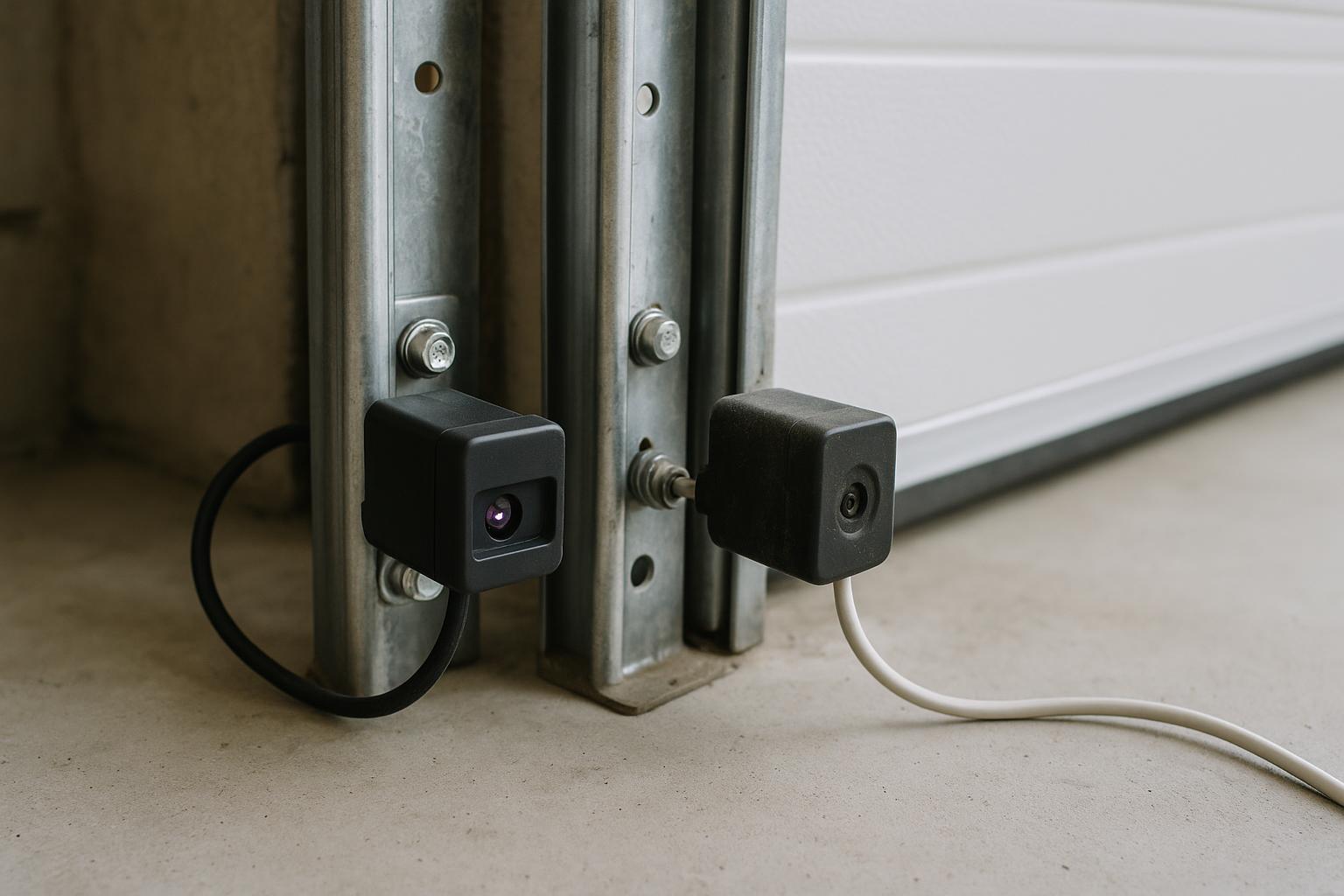
This is the number one reason garage doors reverse before closing completely. Every automatic garage door opener has two photo-eye sensors mounted near the bottom of the door tracks, one on each side. These sensors send an invisible infrared beam across the opening. When something breaks that beam, the door reverses to avoid crushing it.
Over time, these sensors can get bumped, shifted, or knocked out of alignment. Even a slight change in angle can cause the beam to miss its target, making the opener think something is blocking the door. Here's what to check:
- Look at the indicator lights on each sensor. Typically, one will glow green and the other amber. If either light is blinking, the sensors are likely misaligned.
- Check for obstructions like cobwebs, dirt, or debris on the sensor lenses. A quick wipe with a clean cloth can sometimes solve the problem instantly.
- Verify the sensors are firmly mounted. The brackets that hold them can loosen over time, especially in garages that see a lot of activity.
If you live in an older home in Waukegan, the garage floor may have shifted slightly over the years due to freeze-thaw cycles common in northern Illinois. This ground movement can gradually pull sensor brackets out of alignment without any obvious cause.
2. Incorrect Close-Limit Settings
Your garage door opener has adjustable settings called travel limits that tell the motor exactly how far the door should move when opening and closing. If the close-limit setting is off, the opener may think the door has hit an obstruction when it's actually just reaching the floor. The opener interprets this resistance as a blockage and reverses the door as a safety precaution.
Adjusting travel limits usually involves turning a small screw or dial on the opener unit itself. Your owner's manual will have specific instructions for your model. However, if you're not comfortable making this adjustment, it's a quick fix for any garage door technician.
3. Worn or Damaged Rollers and Tracks
When rollers wear out or tracks become bent or dirty, the door encounters extra friction as it moves. This added resistance can fool the opener's auto-reverse mechanism into thinking something is blocking the door's path. Signs that your rollers or tracks may be the culprit include:
- Grinding, squealing, or scraping noises during operation
- The door moving unevenly or appearing crooked as it travels
- Visible damage, rust, or flat spots on the rollers
- Debris or buildup inside the tracks
Regular maintenance — including cleaning the tracks and lubricating the rollers — can prevent this issue. We recommend Waukegan homeowners schedule a maintenance check at least once a year, ideally before winter when cold temperatures make lubrication even more critical.
4. Problems with the Door Springs
Your garage door springs bear the majority of the door's weight, making it possible for the opener motor to lift and lower the door smoothly. When a spring is weakening, broken, or improperly balanced, the opener has to work much harder. This extra strain can trigger the auto-reverse feature.
If your door feels unusually heavy when you try to lift it manually, or if you notice a gap in one of the torsion springs above the door, spring replacement is likely needed. We strongly advise against attempting spring repairs yourself. Garage door springs are under extreme tension and can cause serious injury if handled improperly. This is one repair that should always be left to a trained professional.
5. Wiring Issues
Less common but still worth mentioning — frayed, damaged, or loose wiring between the opener and the safety sensors can send intermittent or incorrect signals. Rodents in the garage can chew through wires, and age can degrade connections over time. If you've checked everything else and the problem persists, a wiring inspection may be in order.
When to Call a Professional
Some of the fixes above — cleaning sensors, checking for obstructions, and tightening brackets — are perfectly safe for homeowners to handle. But if the problem continues after basic troubleshooting, or if you suspect issues with springs, wiring, or the opener mechanism itself, it's time to bring in a professional.
Continuing to operate a garage door that repeatedly reverses can put unnecessary stress on the opener motor, potentially burning it out and turning a minor repair into a major expense. It can also create a security risk if the door won't stay closed, leaving your garage and home vulnerable.
Keeping Your Garage Door Reliable Year-Round
Living in the Waukegan area means your garage door faces temperature extremes, from humid summers to bitterly cold winters along Lake Michigan. These conditions accelerate wear on every component of your garage door system. A proactive approach to maintenance goes a long way toward preventing the kind of unexpected problems that leave you standing in your driveway pressing the remote button over and over.
Here are a few simple habits that can help:
- Test the auto-reverse monthly by placing a roll of paper towels in the door's path. The door should reverse upon contact.
- Visually inspect sensors, springs, cables, and rollers every few months for obvious signs of wear or damage.
- Lubricate moving parts with a silicone-based garage door lubricant twice a year.
- Schedule professional maintenance annually to catch small issues before they become costly repairs.
At Waukegan Garage Door, we help homeowners throughout Waukegan, Gurnee, Libertyville, and the rest of Lake County keep their garage doors running safely and smoothly. Whether you need a quick sensor realignment, a spring replacement, or a complete diagnostic of a door that just won't cooperate, we're here to help with honest pricing and reliable service.
If your garage door keeps reversing and you can't figure out why, don't let the problem linger. Give us a call and we'll get it sorted out — usually in a single visit.