
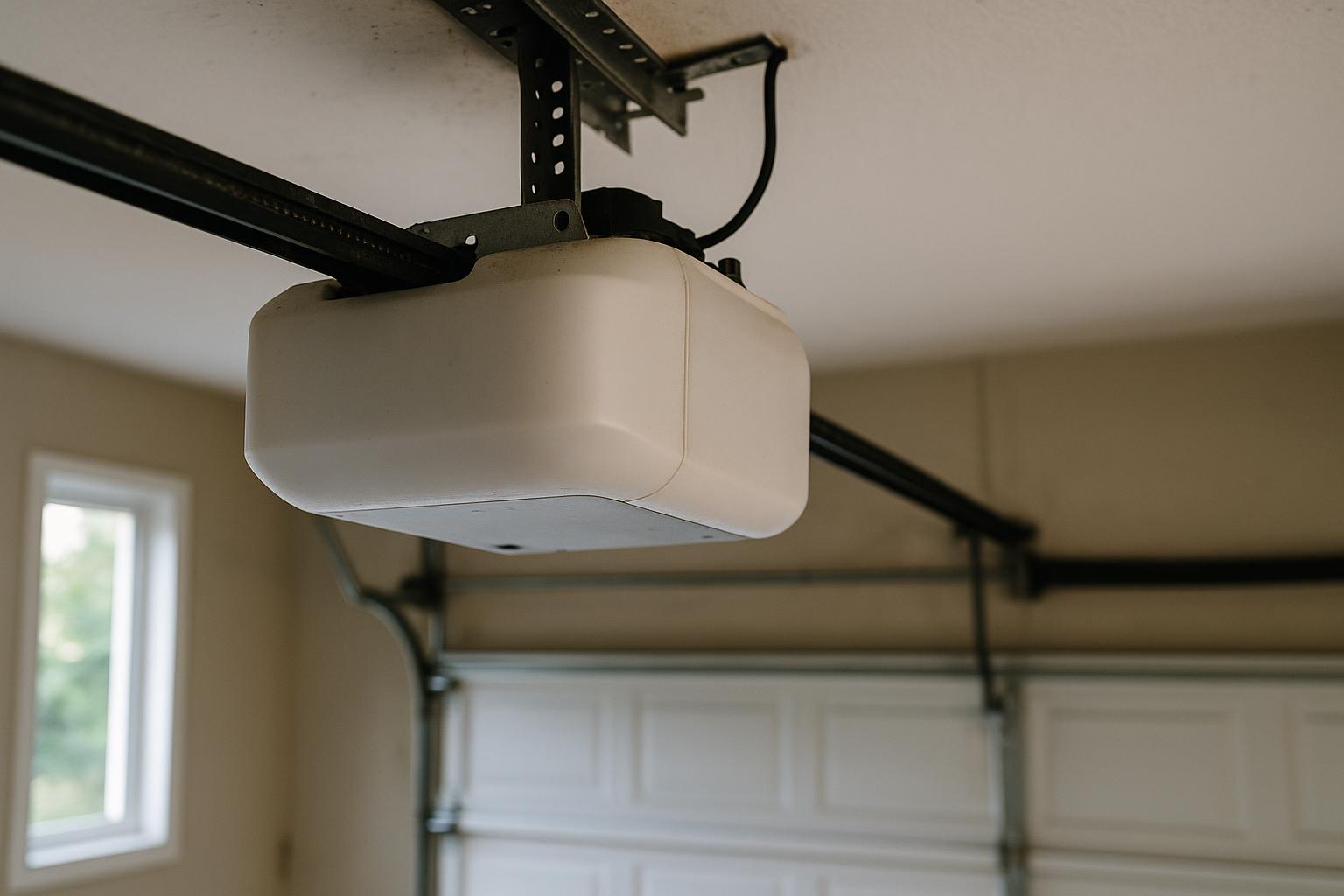
Your Garage Door Opener Won't Last Forever
Your garage door opener is one of those things you don't think about until it stops working. You press the button, the door goes up, and you pull into the garage. Simple. But like any mechanical device, garage door openers wear out over time. The average opener lasts about 10 to 15 years, depending on usage, maintenance, and the quality of the unit.
The good news is that a failing opener rarely dies without warning. There are almost always signs that something is going wrong well before the motor burns out completely. If you're a homeowner in Waukegan or the surrounding Lake County area, knowing these warning signs can save you from getting stuck outside your garage on a freezing January morning.
7 Warning Signs Your Garage Door Opener Is Failing
1. The Door Moves Slower Than Usual
If your garage door has started creeping open or closed at a noticeably slower pace, the opener motor may be struggling. While a slight slowdown can sometimes be attributed to cold weather or lack of lubrication on the tracks and rollers, a consistent reduction in speed usually points to a motor that's losing power. Pay attention to whether the problem gets worse over weeks or months — that's a clear sign of progressive wear.
2. The Opener Makes Grinding or Straining Noises
All garage door openers make some noise, but there's a difference between normal operational sound and the grinding, whining, or straining sounds of a unit that's working too hard. Chain-drive openers are naturally louder than belt-drive models, so you need to compare the noise to what your specific opener sounded like when it was new. New or worsening sounds — especially grinding — often indicate worn gears inside the motor housing.
3. The Door Opens or Closes Intermittently
You press the wall button or remote, and sometimes the door responds, sometimes it doesn't. This intermittent behavior can be caused by several things, including a failing circuit board, worn wiring connections, or a motor that's overheating and shutting itself off. Before assuming the opener is the problem, try replacing the batteries in your remote. If the wall-mounted button also fails to work consistently, the issue is almost certainly with the opener itself.
4. The Opener Vibrates Excessively
Some vibration is normal during operation, but if your opener has started shaking noticeably or you can see it moving on its mounting bracket, something internal is likely off balance. Worn gears, a failing motor, or loose internal components can all cause excessive vibration. Left unchecked, this can loosen the mounting hardware and create a safety concern.
5. The Door Reverses for No Apparent Reason
While we've covered door reversal related to sensor and track issues in a previous post, an opener with a failing logic board can also cause random reversals. If you've already checked the safety sensors, cleaned the sensor eyes, and verified there are no obstructions, the opener's internal electronics may be malfunctioning.
6. You Smell Burning or Notice a Burning Odor
This one is urgent. If you smell something burning when your garage door opener runs, stop using it immediately. A burning smell typically means the motor is overheating, which can be caused by a seized motor, stripped gears forcing the motor to work harder, or an electrical short. Continuing to operate an opener in this condition is a fire risk. Call a professional right away.
7. Your Opener Is More Than 15 Years Old
Even if your older opener still technically works, age alone is a reason to consider replacement. Openers manufactured before 1993 may lack the federally mandated auto-reverse safety feature. Models from the early 2000s often lack rolling-code technology, which means their signals can be intercepted and your garage security is compromised. Modern openers are quieter, more energy-efficient, and come with smart features like smartphone control and battery backup.
Can a Garage Door Opener Be Repaired?
In some cases, yes. Specific components like the gear and sprocket assembly, the circuit board, or the capacitor can be replaced individually, which is often more cost-effective than a full replacement. A qualified technician can diagnose whether a repair makes sense or whether you're better off investing in a new unit.
As a general rule of thumb:
- If the opener is under 8 years old and the repair cost is less than half the price of a new unit, repair is usually the smart choice.
- If the opener is over 10 years old and needs a major repair like a motor replacement, you're usually better off replacing the entire unit.
- If the opener lacks modern safety features, replacement is strongly recommended regardless of the repair cost.
What to Look for in a New Garage Door Opener
If it's time for a replacement, here are the key features to consider:
- Drive type: Belt-drive openers are the quietest option, ideal if you have living space above or adjacent to the garage. Chain-drive models are more affordable and extremely durable. Screw-drive openers fall somewhere in between.
- Motor power: A standard single-car garage door typically needs a 1/2 HP motor. Heavier double doors or insulated doors may require 3/4 HP or more.
- Smart connectivity: Many modern openers offer Wi-Fi connectivity, allowing you to monitor and control your garage door from your phone. This is especially useful for homeowners who want to let in deliveries or check whether they left the door open.
- Battery backup: Power outages happen in Waukegan, especially during severe storms. A battery backup ensures you can still operate your garage door when the power goes out.
- Security features: Look for rolling-code technology, which changes the access code every time you use the remote, preventing code theft.
Professional Installation Matters
While it might be tempting to install a garage door opener yourself, professional installation ensures the unit is properly mounted, balanced, and calibrated. An improperly installed opener can put excessive strain on the door, damage the tracks, or create a safety hazard. The mounting angle, chain or belt tension, force settings, and travel limits all need to be set precisely for safe and reliable operation.
At Waukegan Garage Door, we install all major brands of garage door openers and can help you choose the right model for your door, your budget, and your lifestyle. We serve homeowners throughout Waukegan, Gurnee, Libertyville, North Chicago, Zion, and Beach Park with honest pricing and no surprise fees.
Don't Wait Until It Completely Fails
A garage door opener that's showing signs of failure is only going to get worse. Addressing the problem early — whether through repair or replacement — saves you from the inconvenience and potential safety risk of a complete breakdown. If your opener is acting up, give us a call. We'll diagnose the issue, give you a straight answer, and get your garage door working reliably again.