
Your Garage Door Springs Are Doing More Work Than You Think
Every time you open or close your garage door, the springs are doing the heavy lifting — literally. A standard residential garage door can weigh anywhere from 130 to 350 pounds, and it's the springs that counterbalance all that weight so your opener (or your arms) can move it smoothly. Over time, that constant tension takes a toll.
For homeowners in Waukegan and the surrounding Lake County area, understanding the lifespan of your garage door springs can save you from an unexpected breakdown on a freezing winter morning or a sweltering summer afternoon. Here's what you need to know about when and why garage door springs need to be replaced.
How Long Do Garage Door Springs Typically Last?
The lifespan of garage door springs is measured in cycles. One cycle equals one full open-and-close of the door. Most standard torsion springs are rated for approximately 10,000 cycles, while high-cycle springs can be rated for 25,000 or even 50,000 cycles.
So how does that translate to years? It depends on how often you use your garage door:
- 2 cycles per day (once out, once in): A standard spring lasts roughly 13-14 years.
- 4 cycles per day (typical for families): A standard spring lasts about 7 years.
- 6-8 cycles per day (busy households, home businesses): A standard spring may only last 3-5 years.
If your garage door is the main entry point for your household — which is the case for many homes in Waukegan and North Chicago — you're probably putting more cycles on those springs than you realize.
Torsion Springs vs. Extension Springs
There are two main types of garage door springs, and they wear differently:
Torsion Springs
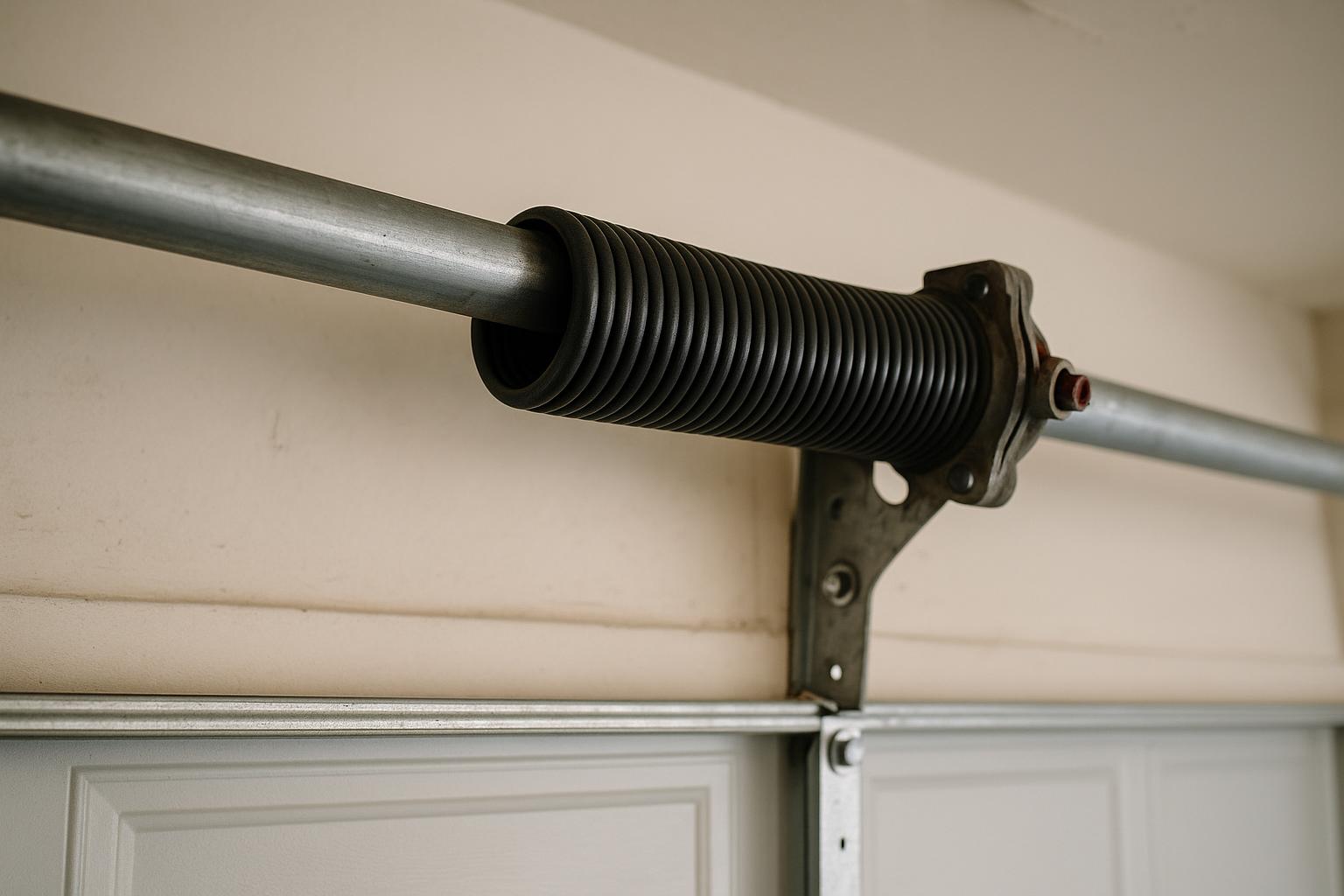
These are mounted on a metal shaft directly above the garage door opening. They use torque to lift the door and are the more common type in modern installations. Torsion springs tend to last longer, operate more smoothly, and are generally considered safer. Most homes built or updated in the last 20 years use torsion springs.
Extension Springs
These run along the horizontal tracks on either side of the door and stretch to store energy. Extension springs are more common on older garage doors and lighter single-car doors. They typically have a shorter lifespan and can be more dangerous when they break if they don't have safety cables installed.
Regardless of type, both will eventually wear out and need replacement. The key is catching the warning signs before a spring snaps unexpectedly.
Warning Signs Your Garage Door Springs Are Wearing Out
Springs rarely fail without giving you some advance notice. Here are the signs Waukegan homeowners should watch for:
- The door feels heavier than usual. If you disconnect the opener and try to lift the door manually, a door with worn springs will feel noticeably heavy or difficult to lift.
- The door doesn't stay open. A healthy spring system should hold the door in place when you open it halfway. If it slides down, the springs are losing tension.
- Visible gaps in the spring coils. Torsion springs that are nearing the end of their life may show a visible gap or separation between coils.
- The door opens unevenly. If one spring is more worn than the other, the door may tilt or jerk to one side as it opens.
- Loud bang from the garage. If you heard a loud bang — like a firecracker — coming from your garage, a spring has likely already broken. This is the sound of the coil unwinding rapidly.
- The opener struggles or stops working. Your garage door opener is designed to move a counterbalanced door, not lift the full weight. When springs weaken, the opener strains and may stop functioning or burn out prematurely.
Can You Replace Garage Door Springs Yourself?
We understand the DIY spirit — it's strong among homeowners here in Waukegan and across communities like Gurnee, Libertyville, and Beach Park. But garage door spring replacement is one job we strongly recommend leaving to professionals.
Here's why:
- Extreme tension. Garage door springs are under tremendous force. A torsion spring that snaps or is improperly wound can cause serious injury or even death.
- Specialized tools required. Proper replacement requires winding bars, clamps, and precise calibration that most homeowners don't have.
- Matching the right spring. Springs must be matched to the exact weight and size of your door. An incorrect spring will cause the door to operate improperly and can damage your opener.
- Warranty concerns. Many garage door and opener warranties are voided if non-professional work is performed on the system.
A trained technician can typically complete a spring replacement in about an hour, and the peace of mind is well worth the investment.
Should You Replace Both Springs at the Same Time?
If your garage door has two torsion springs (which is common on double-car doors), we almost always recommend replacing both at the same time — even if only one has broken. Here's the reasoning:
- Both springs were installed at the same time, so they've endured the same number of cycles.
- If one has broken or is showing wear, the other is likely not far behind.
- Replacing both at once saves you from paying for a second service call in a few months.
- It ensures even tension on both sides of the door, which protects your opener and tracks.
Think of it like replacing tires — you want even wear across the system for the best performance and safety.
How Weather Affects Spring Lifespan in Waukegan
Living in northern Illinois means your garage door springs deal with temperature extremes that many parts of the country don't experience. Cold weather causes metal to contract, making springs more brittle and prone to snapping. It's no coincidence that we see a spike in broken spring calls during January and February.
The freeze-thaw cycles common around Lake County also contribute to wear on the entire garage door system, including the springs, cables, and rollers. Regular maintenance — including lubrication with a silicone-based spray — can help your springs withstand these conditions and last closer to their full rated lifespan.
When to Schedule a Spring Inspection
If your garage door springs are more than five years old, it's a good idea to have them inspected by a professional. During a routine maintenance visit, a technician will check spring tension, look for signs of corrosion or fatigue, inspect safety cables, and lubricate moving parts.
We recommend scheduling an inspection at least once a year — ideally in the fall before the coldest months arrive. This gives you time to address any issues before winter puts extra stress on the system.
Don't Wait for a Spring to Snap
A broken garage door spring isn't just an inconvenience — it can leave your car trapped in the garage, compromise your home's security, and even pose a safety hazard. By understanding how long springs last and recognizing the early warning signs, you can stay ahead of the problem.
If you're in Waukegan, Zion, North Chicago, or anywhere in the Lake County area and your garage door springs are showing signs of wear, don't wait for them to break. Contact Waukegan Garage Door for an honest assessment and reliable spring replacement service. We'll get your door operating safely and smoothly — no surprises, no upsells, just quality work.